

Hello folks, and welcome to all the new subscribers!
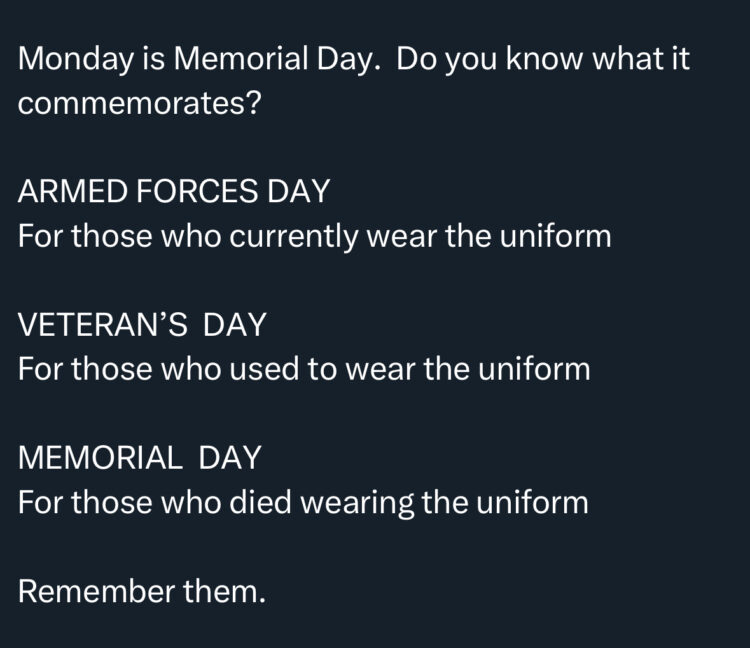
First off, it’s Memorial Day in the US today: to all who gave this last full measure of devotion we owe a debt of gratitude, thanks and remembrance. There seems to be some common misunderstanding as to what exactly this is all about – it’s not that hard. Personally, a number of my family members have served, but only in the last year when doing genealogy research did I become aware of one who died in battle; at Bastogne in December 1944. As of 2025, he leaves one living sibling.
But this newsletter is about The Beatles, not me: one notable aspect of their story concerns National Service in the UK. Following the war, compulsory peacetime military service for young men was mandated in 1949 – you can read the particulars here. Think about that for a second: there but for fortune, the four who became Beatles sidestepped a disruption in their career momentum – who knows if they ever would’ve regained it and in what form? But for the program ending in late 1960 (just when their first Hamburg hitch ended – badly), they were spared a fate like this.

Interesting but seldom commented upon: at the height of the Vietnam war, which many of their generation fervently opposed, Ringo was the one who recorded a song commemorating the fallen. The toll that armed conflicts take on loved ones as well as those who love them is rarely expressed so eloquently in song, at least among The Beatles’ peer group.
But getting political in song was nothing that The Beatles (or at least John) were shy about post-Brian. One can argue about what constitutes “politics” in song (“The Word”? “All You Need Is Love”?), but overt politics, inspired by contemporary events, was out in the open by 1968. Paul has taken a lot of flack through the years for his evolving origin stories RE “Blackbird” and the Civil Rights movement: getting so specific in recent years as to cite the Little Rock Nine as inspiration. While his explanations have typically fused women (“birds”) and people of color (“Black”), plenty have met the claims with mountains of skepticism, among them, Hunter Davies, who was certainly around at the time, as well as Paul’s step-mother: Angie is quite vehement that the initial inspiration came from some “blackbirds” who were keeping her mother, Edie, from sleeping one night/morning. (As evidence, they cite the recording of numerous attempts at performing the song by Paul that he dedicates to “Edie.” This tape, bootlegged in the ’70s on this release, was recorded in 1974 at Elstree Studio, in connection to the One Hand Clapping project.)
On the other side of the argument, the timing works out: if Paul initially conceived the tune (itself inspired as Bach-influenced finger exercise) in India, Paul was back in Scotland in time for the assassination of Dr. Martin Luther King on April 4, 1968, as well as the subsequent rioting that followed in the US. Paul was aware of these events (though he never seems to have evoked King in his explanations, merely the rioting). But the most compelling evidence of some kind of civil rights connection more or less contemporaneously came just after the release of The Beatles, in late 1968 when Paul was taped in the studio with Donovan, working on Mary Hopkin’s Post Card album. He performs the song for Donovan (who had a vested interest: did you know that he was in Rishikesh with The Beatles that year, and that he taught them Travis-style fingerpicking? Just ask him – you just might be able to pry it out of him…) In this non-public documentation, Paul makes a joke about Diana Ross before earnestly asserting that the song was in fact inspired by civil rights. (Look for a deep dive into this and related topics on an upcoming episode featuring two special guests…)
John led the way with overt politics with the first tune tracked for the “White Album” sessions at EMI, “Revolution 1.” Per the lore, it was freshly composed, inspired by the recent student riots in Paris (which incidentally impacted George directly: in France with Ringo for the Wonderwall premiere, the Cannes Film Festival was cancelled one day after the film was screened). Per his wishes, The Beatles laid down a bluesy, slow-paced version, that the words (including his “out/in” ambivalence) might be clearly understood. John pushed for this take to be issued as a single, that their audience might see what side they were on (both/neither). But as he would assert later, Paul and George didn’t think this approach was commercial enough for product going out under their collective name: it was momentarily shelved, while the extended coda would be repurposed as the foundation for his Musique concrète depiction of the sound of a revolution, “Revolution 9,” until the group re-cut the familiar fast version in July.
Recorded on May 30, 1968, it was the attempt designated as “take 18” that became the foundation of both White Album “Revolution”s. Worth noting is the way the song was received in its day by those for whom the message may have been directly intended, especially when contrasted with the take issued by “arch-rivals,” the Rolling Stones at around the same time. In response to criticism from the “New Left” about the song, John was defensive, although his position – like so much else – was susceptible to outside influence over time. See this terrific post from Erin Weber on the subject. (Karen Hooper’s money quote: “It’s interesting to me that although John claimed retrospectively that his time with the Beatles was stifling, the truth of the matter is that the Beatle years represented a time with John was the most capable of thinking and acting independently.”)
Mortality report: there are things in this world I don’t care about and one of them is football. (“You commie, you!”) Therefore, but for a mutual friend bringing it to my attention, I would not have known about this at all because it simply did not pop up in any of my usual feeds: the passing of Indianapolis Colts owner Jim Irsay at 65. You may wonder why this is worth mentioning: it’s because Irsay, son of a self-made heating/air-conditioning contractor, spent his fortune (in the end, in the billions), doing what a lot of us of lesser fortunes do: collecting. And in this pursuit, Jim loved two things: history and The Beatles. (A man after my own heart.) You can read about it here and here. Highlights include Ringo’s drop-T Ed Sullivan Show debut bass drum head – George’s “Paperback Writer” Gibson SG (later gifted to Badfinger’s Pete Ham) – John’s Vox Kensington guitar – Paul’s 1979 Yamaha bass. As Jim was find of saying, in his way he had reunited The Beatles.

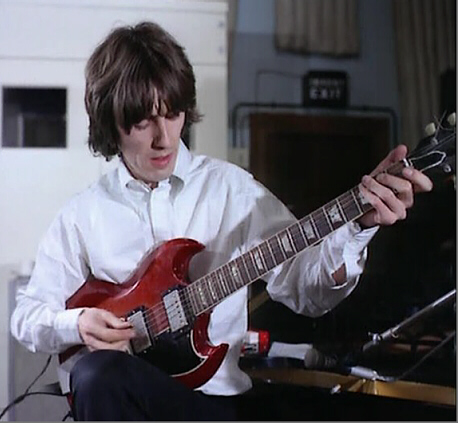
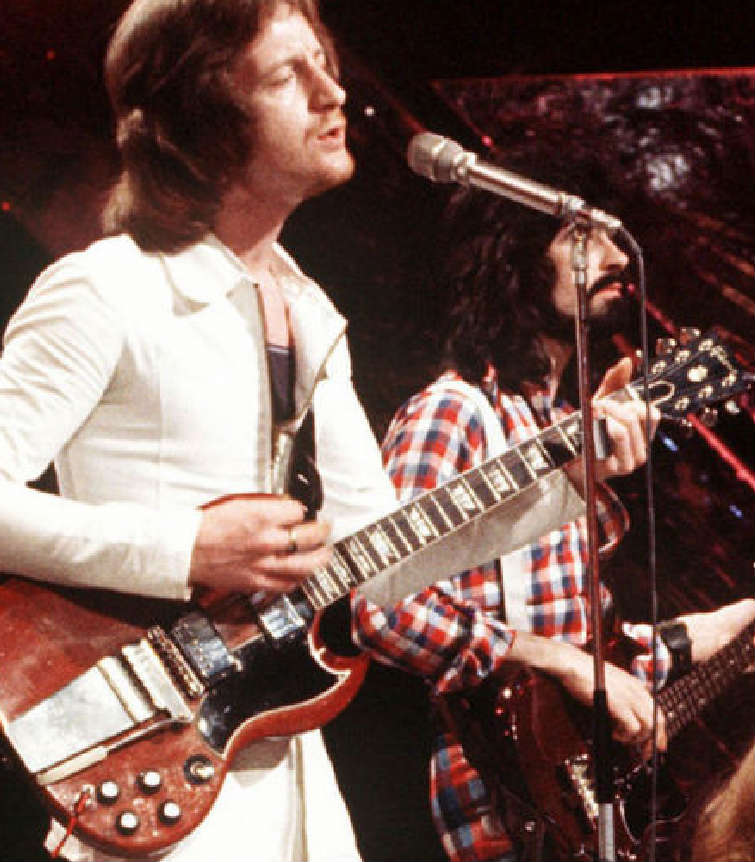

Other stuff: I hope all of you are enjoying the conversation in 305 with Marcus Phelan and Andrew Shakespeare, Contentious Credits. Do check out Marcus’ videos, and this performance by Andrew and his crew (he’s doing all the guitars). Suggestions for a part 2? Send them here, subject-line “CC.”
Updates: all of you who have had problems with the SATB site: I have thrown in the towel and am working on getting a completely revamped site put together as soon as possible. Too many niggling things needing work, and so why not get it all handled? No forward movement yet on Spotify – stay tuned for that.
Sad news from Jerry Hammack: he will not be attending the Magical Mystery Camp next month, or the Fest in August in Rosemont, due to some serious health concerns that impact prolonged travel. We wish him the absolute best for recovery over time. I can report that we just did an interview with the lovely Jude Kessler on her Tell Me Why podcast about Ribbons of Rust Vol. 1 – it’ll be posted here and in my socials once it goes live. Also: I had a terrific conversation about Badfinger with Jacob Markus and his Vinyl Verdict show. (Also not live yet but coming soon – do check out his channel in the meantime…)
One more thing in the news: this write-up of Paul’s aborted Return To Pepperland project. With someone as prolific as him, where do you even start?