

Hello all;
I hope everyone has had a chance to take a dip into 300. I am glad to have finished it up, but I think I would’ve been fine-tuning it to death, absent a deadline, to no one’s great benefit. But once again I am grateful to all who contributed their thoughts, input and support through the years and for this episode specifically. It was great to hear what you had to say, and also to remind me of things I’d forgotten about.
The biggest takeaway I have is that even as I included most every suggestion, I could easily have cut another show every bit as long without repeating a guest. It could have included Jenny Boyd, Alan Parsons, Randy Bachman, Tom Brothers, Tom Murray, Paul Saltzman, Jody Stephens, Dave Mirkin, Bruce Thomas, Ivor Davis, Chip Madinger, Walter Everett, Doug Sulpy, Vic Flick, Keven Harrington, Lon Van Eaton, Mike McCartney, Gary Weis, Spencer Leigh and many more. What it really tells me is that there is a ton to discuss and explore and therefore we can keep this going for the foreseeable.
As it is the start of a new month, here is another installment of the Seederman Chronology. Volume 5 begins in June 1971 with the Imagine sessions and ends with the February 1973 appearance of Badfinger on Midnight Special; along the way are excerpts from the Bangladesh and One to One shows, plus promos from Wings and Ringo, as well as more Badfinger and some Fab covers from Richie Havens and Faces. Even though we’re talking a window of less than two years, the former Beatles are still operating at a pretty high level of productivity with music, performances and film work. Pretty astonishing from the perspective of what we’re accustomed to these days.
Last week was the Teaflix conversation (not really an interview as such) with Angie and Ruth McCartney. You can see it here. Their show has hosted the usual suspects in recent months, including two who will be familiar to SATB listeners, Debbie Gendler and Allison Bumsted.
In case anyone is wondering what the McCartney connection is: Angie was a widow with a young daughter when friends introduced her to widower James McCartney, Paul’s father, in 1964. They were married in November that year and lived in Wirral until Jim’s death in 1976. There are stories connecting Angie and Ruth to compositions Paul wrote: some of you may be familiar with a circulating tape of “Blackbird” containing a number of false starts that Paul dedicates to “Edie” – according to Angie, Edie was her Mum and there’s a definite blackbird story behind it. Most fans are familiar with the “Golden Slumbers” backstory and how Paul found an open music book on the piano when visiting his father; the book was Ruth’s, who was studying piano at the time. Paul made up his own melody since, unlike Ruth, he couldn’t read music, but he did crib some of the lyrics. We talked off air about having them on the show to relate their side of things.
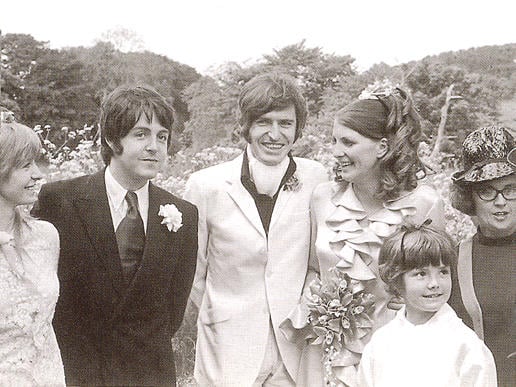
Mike McCartney’s June 1968 wedding: that’s Angie at right (w/glasses) and Ruth to the left of her.
Speaking of Sir Paul, word came of a new book and film project about Wings this week. One of the criticisms of the 2001 Wingspan project was that it was McCartney-centric to the point of shutting out pretty much every other POV. But at the time, Paul (and daughter Mary) said that it was more meant to present Paul and Linda’s story in a band, rather than an all encompassing history of Wings. So the fact that we are now getting something drawn from oral histories drawn from the key players is a good thing. We’ll withhold judgment until we see it, but in the meantime for anyone who didn’t see it, here’s Wingspan.
Other stuff: Dennis Diken plays drums with The Smithereens, as you all know. One of the beautiful unexpected side effects of producing this podcast has been meeting people who I have admired for years, who connect with me because they enjoy SATB. It is slightly surreal to spend time with a guy who, in a previous life, I was in a garage band copying his licks. But Dennis is far more than a terrific musician: he’s a rock historian/writer/researcher and also occasional radio show host.
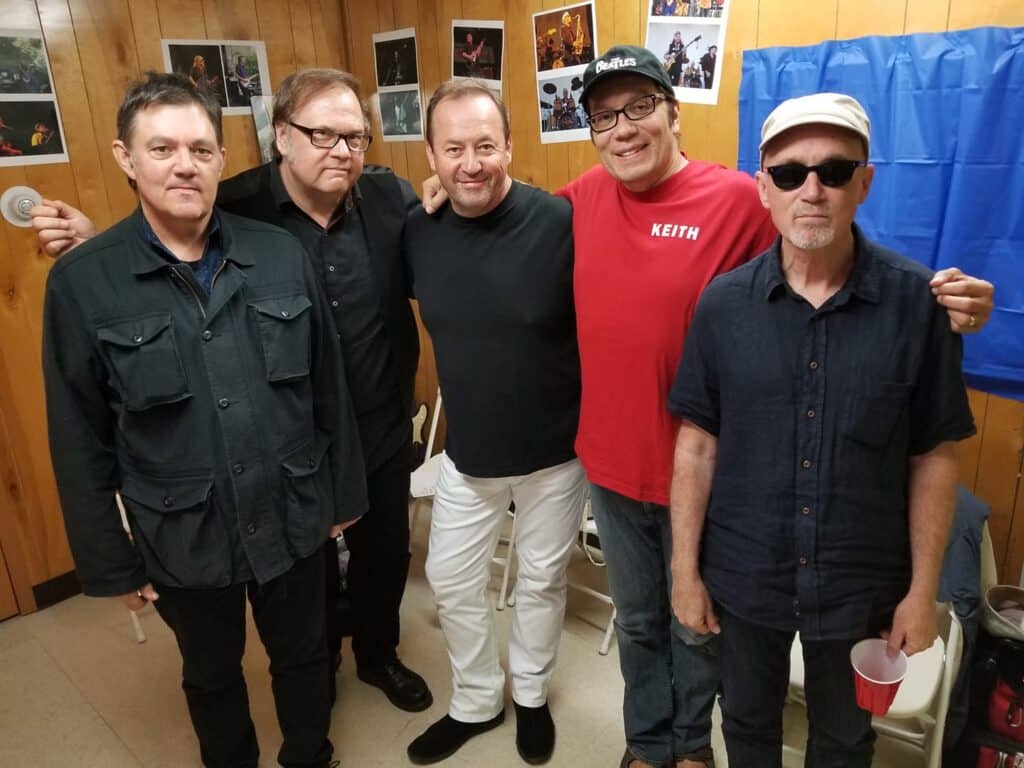
The Smithereens with Marshall Crenshaw
You’ve heard him on SATB on the Now and Then episode as well as the Sixty Years Ago in America show (285) with Lee Abrams and Elliot Easton. In any event, he’s a guest on the current episode of Discograffiti podcast, discussing the Beach Boys.
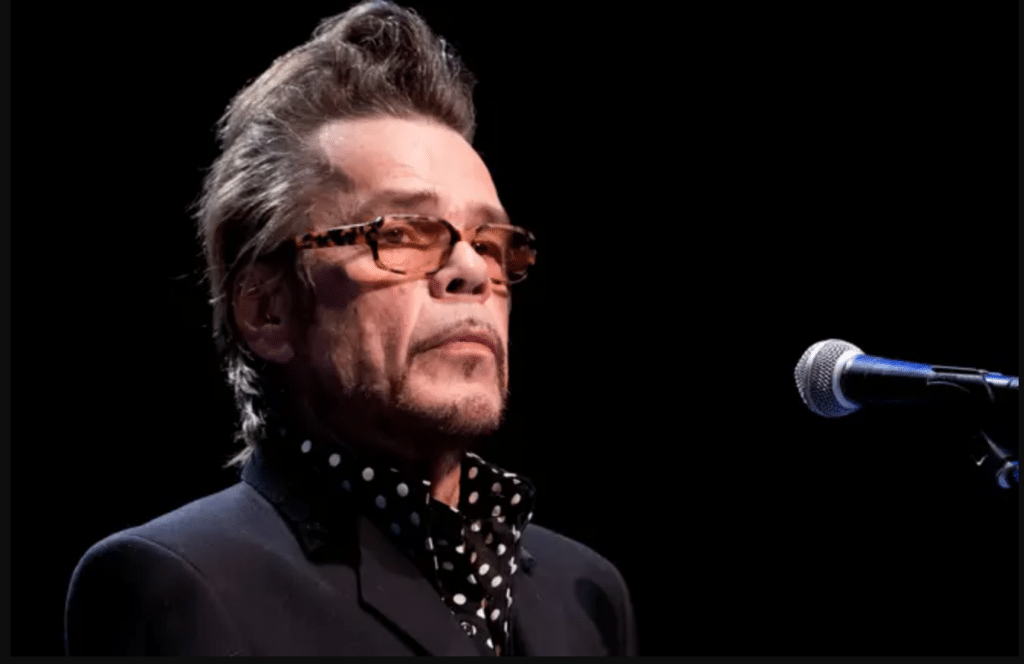
We’ve had a couple of sad passings to note: Joey Molland’s is a huge one and is addressed separately, but there was also David Johansen, known to all as a solo recording artist, as Buster Poindexter and of course for his tenure with the New York Dolls. Like so many others, there is a Beatles (or more specifically Lennon) connection: his legs appear in the 1971 LenOno film, Up Your Legs Forever, and he also appeared in 2014 at a NYC Lennon tribute concert (pictured here). David was 75.
Last: Magical Mystery Camp is coming up. You can check out the line-up here, and the events here. Know that there will be loads of music: some you can watch, some you can partake in, and a lot that’s discussed and analyzed. Tickets here.
Thanks to everyone for being here. As always, you can unsubscribe at any time (subject line “unsubscribe”), request old newsletters (subject line “old newsletters”) or suggest topics (subject line “topics”) for the show. And turn your friends on to this show, please!
__________________________________________________________
Joey Molland March 3, 2025
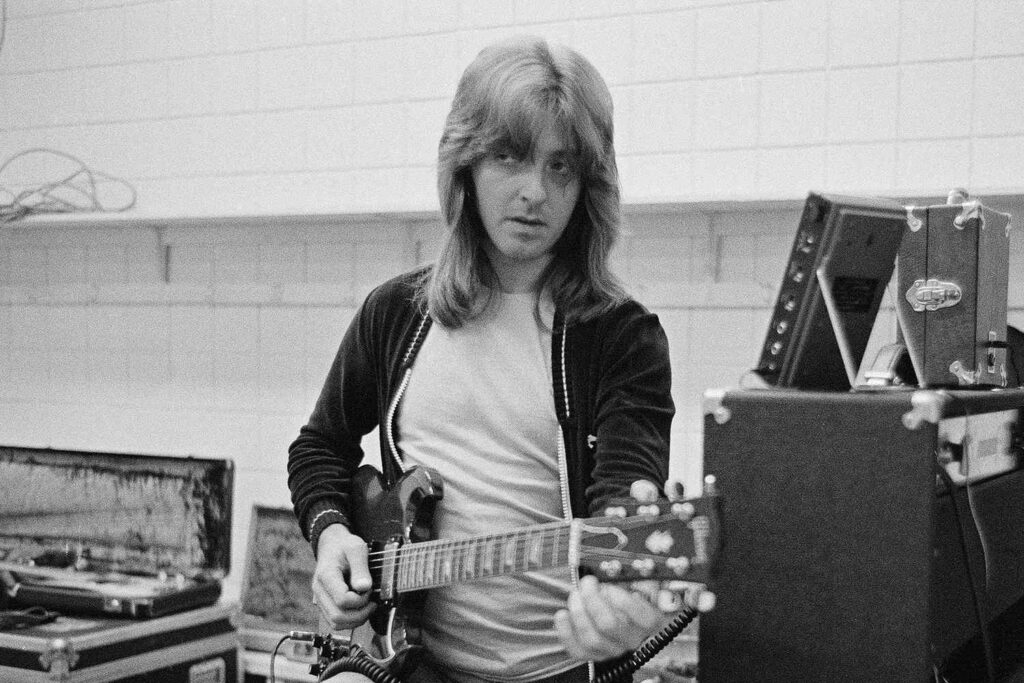
This has, so far, been a year heavy with losses, many of them noted in this newsletter. But this one hits particularly hard, with someone I knew personally and reconnected with fairly recently. It is a measure of the esteem so many felt toward this man that social media is loaded with messages of mourning containing the words “my friend.” For once, this isn’t self-aggrandizement between fan and artist, because Joey Molland was that rarest of things: someone who produced timeless, enduring music (who also happened to have performed and recorded with The ex-Beatles), and a guy who connected with people in a way that made them feel like they were good friends.
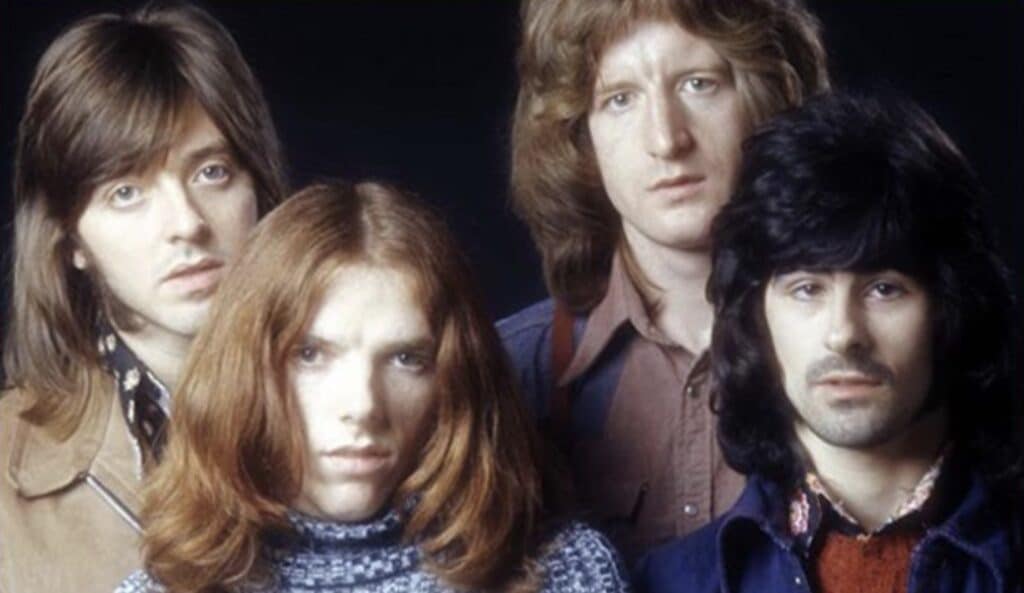
He was a Beatles fan himself and a Liverpudlian besides; he came up loving the same music that they did, knew (and played) the same clubs, and of course worked alongside them in the studio: supporting their projects and getting support in return as Apple artists. Joey was not yet on board when The Iveys, as Pete Ham, Tom Evans, Mike Gibbins and Ron Griffiths were originally signed to the label, recording Paul’s “Come and Get It” (and being produced by him besides), but he was when the record was issued and promoted.
Badfinger followed the single’s worldwide success with sessions initially produced by Mal Evans that yielded another smash, “No Matter What,” this one written by Pete Ham. No Dice featured Joey as a fully assimilated member of the group, as they pivoted away from pure pop, shifting to a live act that featured dueling leads and jamming onstage. Their onstage persona contrasted with their finely crafted melodies and harmonies, epitomized by “Without You,” a Ham-Evans co-write and colossal money-spinner in the hands of others, beginning with Harry Nilsson. Each member of the group wrote fine material, but while it was Ham’s talents that yielded the radio hits, Molland’s contributions to their albums and subsequent live sets were no less essential to the band’s overall creative success. What ultimately doomed them was bigger than the failed dream of Apple: it was the direct effects of outright theft by their American manager, Stan Polley, who pocketed the profits on their succession of hits, putting the band in legal limbo with their record label and keeping this hit act in the dark by preying on their naivety and misplaced trust. It led directly to the suicide of Pete Ham; the aftershock of this tragedy in 1975 rebounded on Tom Evans, who took his own life in 1983.
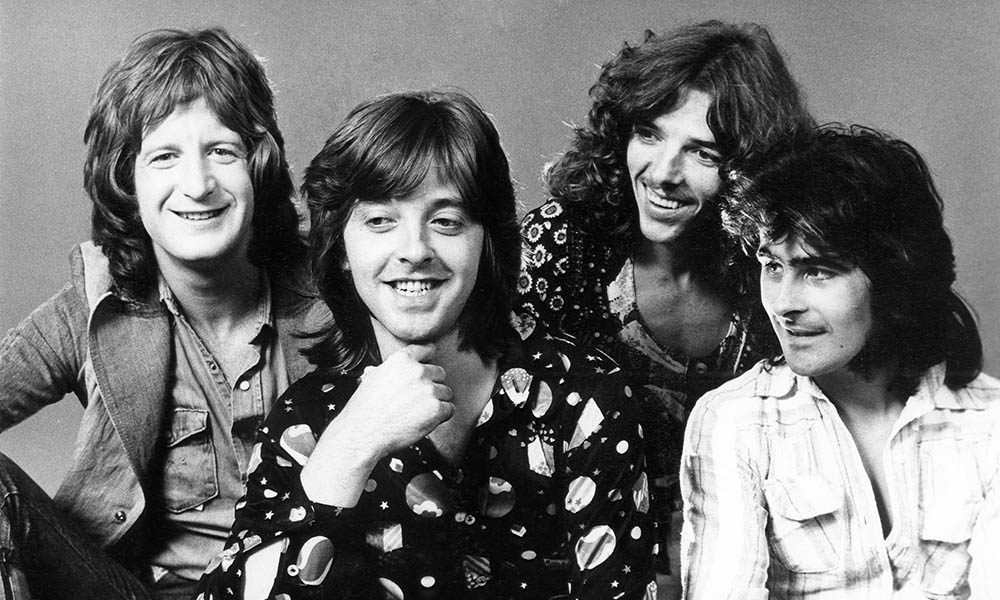
Joey’s career continued on after his 1974 departure from Badfinger, following their superb Wish You Were Here album, released on Warner Brothers and produced by Chris Thomas. He first formed Natural Gas (initially working with Mal Evans again) and later, re-teamed with Tom Evans with a reconstituted Badfinger for 1979’s Airwaves and 1981’s Say No More. Joey never ceased to produce memorable pop/rock music and you can sample 24 tracks spanning 1970’s No Dice through 1992’s The Pilgrim here.
This represents a thumbnail view of Joey’s career with Badfinger and slightly beyond, but if you’ll indulge me for a second, I’d like to share a bit of my own memories. I first became a fan of the group at some point in the late ’70s, when their body of work (everything except Straight Up) could easily be found in cut-out bins: Pete was gone and Apple was in disarray. My first opportunity to see Badfinger live came in 1983, when I was astonished to find that they were coming to play a club in my community known largely for hosting metal bands. The line-up that night included Tom Evans as well as former Yes keyboardist Tony Kaye, who’d played on Say No More, plus others from that album and Bob Jackson, who had replaced Joey in Badfinger back in 1974 (and who played on the recently reissued Head First album). Joey was not in the band that night, and what I learned later is that creative and business differences led to a parting of ways between Evans and Molland; for a time, two competing versions of the band were on the road simultaneously.
It was disappointing not to meet Joey that night, but crushing to learn that Evans too took his own life a couple of months later. This might have been the end of the story, but in 1984 the unmistakable sound of Joey Molland was heard on Chicago’s WXRT: “Here Comes Heartache,” from a newly-issued solo album (After The Pearl). Neither Molland nor Badfinger appeared in my area again, as far as I knew, until the later 80s, when they became a regular feature around Chicago, sometimes performing with Humble Pie’s Jerry Shirley on drums (he was in Natural Gas with Joey); sometimes with the original Badfinger drummer, Mike Gibbins. The clubs were small enough to enjoy an in-your-face live experience with a tight band, playing the band’s back catalog as well as solo material and whatever else. It was during this time that I met and got to connect with Joey. It was immediately evident that he loved gigging – that each show was a unique experience where anything could happen – and that the crowds that came were utterly devoted to Badfinger and Joey and he exuded joy and positivity: a remarkable characteristic for someone who’d seen so much tragedy.
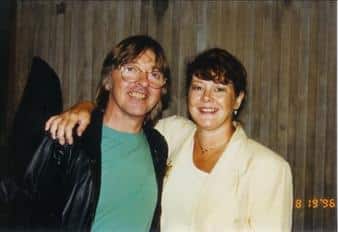
I also came to know his wife Kathie, and for anyone who ever met her, she was a force of nature. She was a Minnesota girl, a former model, who’d met Joey in 1970 and married him in 1972. Theirs was a happy pairing: they raised two sons and eventually relocated to her home state. She was devoted to Joey’s career and made up for his looseness and spontaneity with a focus and a discipline that simultaneously handled the fans (with kindness and grace) while not suffering fools and speaking her mind. These traits most definitely did not endure her to all, but we connected and many’s the hour we spent on the phone: just like her husband, she was a raconteur and could spin stories of the famous she’d met along the way vividly and unceasingly entertainingly.
At some point, I floated the idea of starting a fanzine about the band and she readily agreed, offering help in any way she could. No Matter What was started around the early 90s with me and my then-girlfriend. Much like SATB, it was a labor of love. At some point, the Mollands invited us up to their home to spend the weekend: they were gracious hosts and while Kathie showed her jewelry and clothing from back in the day, Joey sat me down to watch uncirculated video of the band. Wonderful stuff! Joey also found out that I was planning on a UK visit, including Liverpool. He asked when I was going, and then immediately offered up his brother Frank to escort me around, showing off the true historic places where he grew up, off the tourist path. Frank and his wife Ethel were wonderful, picking me up at Lime Street station and taking me to their former residences and around town that, truth be told, they were slightly embarrassed to show off, as a sanitation workers strike was then in progress. But I never forgot their kindness, or Joey’s for setting it up.
The fanzine came to an end when it reached the point of becoming far too big a job than we could handle (as well as the interference of a purported agent that arrived on the scene, who meddled and micromanaged our work to the point of us deciding we were finished). But then in 2006 or so, I reached out to Kathie again: my first Beatles book, Fab Four FAQ was in production and I wondered if Joey might be interested in contributing a Foreword? Kathie thought it was a great idea, but recall this was when the internet was still relatively young. Joey’s response came when he politely declined, citing his belief that there were a lot of folks online who thought of him as an “asshole” and he therefore didn’t want to put any taint on the book that his name might bring. I was crushed and Kathie was disappointed, but told me that she couldn’t talk him out of it. That was that, and as I recall, I ran into Joey here and there and things remained cordial, but my own life had become busy, as I was now a father.
Then came the day in March 2009 when an awful email came: Kathie had passed away in her sleep, due to an apparent aneurysm. I couldn’t believe it: this vital woman who was such a powerhouse was now gone so unexpectedly. The memories came flooding back: her driving around Minnesota to show me the house where the exteriors for The Mary Tyler Moore Show were filmed, and her singing along to the car radio as it played the Friends of Distinction’s “Love or Let Me Be Lonely.” I wondered how much loss Joey could withstand, but I recalled conversations where he talked about the loss of Tom, and how the mindset of suicide never occurred to him. “You just get on with it,” he would say, and that’s what he and the boys did, I suppose. But I never forgot her, and in 2014, Joey and I connected again, this time at The Fest in Los Angeles. My Solo in the 70s book was just out and I gave him a copy, with the dedication page open: “To fellow travelers lost along the way: Mal, Kathie and Jackie” (Lomax, who’d penned an Afterword to that first Beatles book). I could see Joey tear up before giving me a hug and thanking me for not forgetting her. I don’t remember what I said back to him, but it was probably something along the lines of, “I couldn’t possibly.”
When the word came that Joey had taken seriously ill back in November 2024, I was shocked but felt confident that he would pull through with sheer grit and his embrace of the joy of living. He’d found a new love, Mary Joyce, and was still performing and recording. He looked great when I saw him in August 2024, and the notion of his body suddenly giving up on him felt preposterous. I knew he’d bounce back, and said so in the newsletter. After things grew seriously dire in the weeks after his hospitalization, I was relieved to see that he’d improved and was in fact being discharged. This was a great sign, and I felt that, per Mary’s update posts, he was on the road to a challenging but successful recovery.
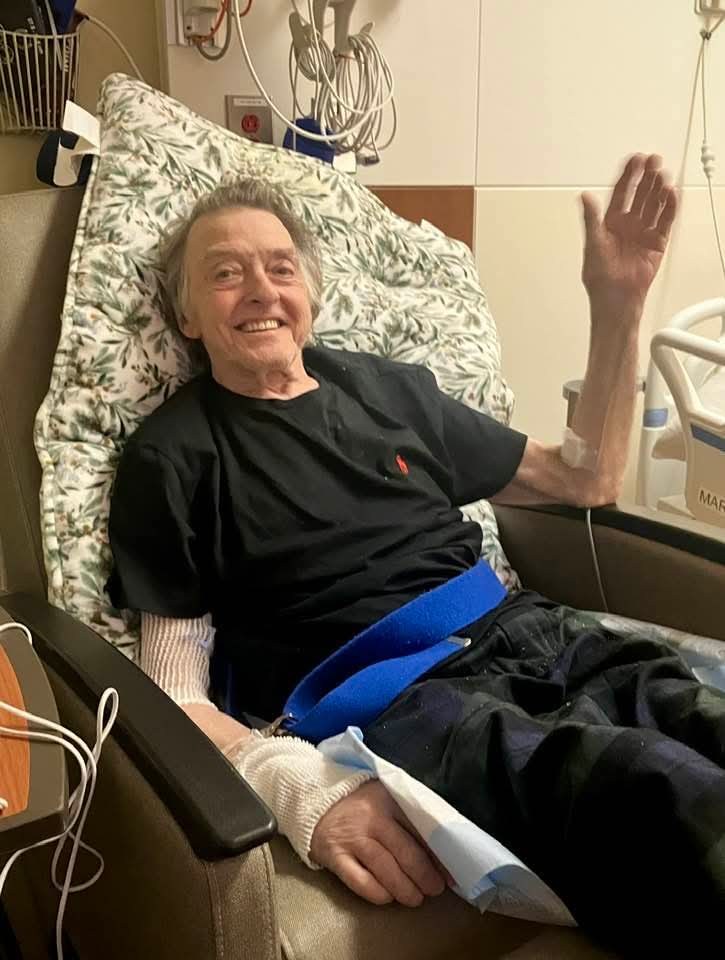
But the optimism began to evaporate as January turned to February. He was battling pneumonia (his diabetes was an underlying issue that really set the whole thing in motion) and the fight against what his body was doing must have been overwhelming. There’d been no updates in recent days, and last night, I noticed what I took to be some alarming social media posts, stopping short of saying that he’d passed, but by reading between lines, something was clearly wrong. After failing to find any definitive news one way or another, I reached out to a mutual friend, who confirmed the news that he in fact had slipped away at 11:29pm Saturday night, surrounded by his family. He was only 77.
If you never met Joey, I want people to know that he was someone who never played star but could be self-deprecating and funny in that Liverpool way that The Beatles conditioned us to think was a given. He embodied music and was a devoted family man; he appreciated his fans and really loved playing live and sharing the stage with others who loved rock ‘n’ roll as much as he did. If I ever managed to get him on the show, what I wanted to talk about was not the same anecdotes he’d talked about at fan conventions for years, but about music: who inspired him? Who did he listen to now? What were some of his favorite records? Music was something that always excited him, and making it as well as enjoying it took him on journeys he could never have dared dream of as a Liverpool lad. I always got the impression that he was chill with the ups and downs of life, and that he’d seen plenty and had much to be grateful for.
His charm and kindness were always evident, and he was the kind of guy who you felt good being around even if it was only for a minute or two. That’s a rare, rare thing. If I take anything with me going forward having learned directly from him, maybe it would be to always enjoy the moment when you’re doing what you love. These times may come and go, but if you are in it for the right reasons and with an open heart, that wave can sustain you indefinitely. Joey was a survivor for a long, long time, but now he rests. He’s earned it, and I can only raise a toast and say, “Godspeed – you made my life better.”