
199: Credit Where Due with Luther Russell
In which my returning guest and I discuss this: what if The Beatles’ songwriting credits were more accurately apportioned to reflect actual significant contributions from not-credited bandmates?
In which my returning guest and I discuss this: what if The Beatles’ songwriting credits were more accurately apportioned to reflect actual significant contributions from not-credited bandmates?
Presented as forerunner of the inevitable show revisiting John Lennon/Plastic Ono Band to come later this year as part of the 50th anniversary, returning guest Chip Madinger (Eight Arms To Hold You, Lennonology) and I discuss some of the assorted odds and sods produced (or proposed) by John Lennon under the Plastic Ono Band brand circa 1969/1970. The POB debut year gave us the singles “Give Peace A Chance” and “Cold Turkey,” but what about the other announced releases? (“Laughing”/”Whispers”; “You Know My Name”/”What’s The New Mary Jane,” and the mysterious instrumental, “Rock Peace”). Chip knows the work and chronology better than anyone when it comes to the solo Beatles and John Lennon in particular. He presents some astonishing information about what was originally planned for 1970 (and about the original form of “How Do You Sleep”). This one’s a treasure trove for Lennononistas… Check out his work at https://www.lennonology.com/ (including the current special).
Previous guest Russ Lease returns with stories from the world of top end collecting: vehicles (including the Magical Mystery Tour bus), attire (shoes, boots, jackets), paper (a Brian Epstein contract) and vinyl.
In his return to the show, we discuss 1968 and the making of the “White Album” (mostly), as explored in his most recent work, The Beatles’ Recording Reference Manual Volume 4. Joining us is another returning guest, recording artist/performer/producer Luther Russell (Those Pretty Wrongs, The Freewheelers, solo). Because we covered so much ground, I am presenting the conversation spread over two parts (the conclusion to follow later….) Check out Jerry’s work here.
It seems particularly fitting at the time we find ourselves in to be discussing the art and career of rock pioneer Little Richard, who passed recently at 87.
So an idea came up: who would SATB like to talk to in Beatle world and sit down for an interview? Qualifications: first, they have to be among the living (as of this taping); Second, they have to be completely honest and not fall back on deflection or “professional Beatle fan” chatter: stories they’ve entertained with for years that may or may not be factually accurate. Last, they have to be people on the inside who have either not told their stories at all or not told them to death. Though mortality hangs over us all, there are still folks out there who, to the best of my knowledge, range to speaking on record only sparingly or not at all; have written books, but if we discussed them here, it’s because their books didn’t go deep enough or raised more questions.) Joining in the conversation is a returning guest (182 and 188), retired academic Gary Wenstrup. He came up with his list, I came up with mine, and together we covered as much ground as we could in this, the first of a two-parter (at least).
Rock historian and radio interviewer Spencer Leigh has been chronicling the music scene generally and The Beatles specifically from his native Merseyside for decades. He has penned well over two dozen books, half of them on Beatles-specific subjects. In this conversation, we discuss an array of topics, including writing and researching The Beatles; Bob Wooler; Liverpool bands; Bob Dylan, and Ken Dodd, among other topics. Check out Spencer’s work here.
The continuation of my conversation with musician/singer/songwriter/producer Luther Russell – whom you may recall (SATB 192) as one half of Those Pretty Wrongs, a duo with Jody Stephens (ex-Big Star). As a devout fan from birth and a drummer himself, Luther possesses considerable insight into what made Ringo the essential Beatle: how a combination of unique skills, background and chemistry with the others made him the band’s most valuable player in a very real sense. This sprawling conversation addresses Ringo’s singular gifts that not only served his band so well over the course of their live and studio career but also how he built the vocabulary that countless others followed in his wake. Luther’s thesis here Heard in this show: “Everything You Do” by Luther Russell from the album The Invisible Audience
My guest today is musician/singer/songwriter/producer Luther Russell – you may recall him (SATB 192) as one half of Those Pretty Wrongs, a duo with Jody Stephens (ex-Big Star). As a devout fan from birth and a drummer himself, Luther possesses considerable insight into what made Ringo the essential Beatle: how a combination of unique skills, background and chemistry with the others made him the band’s most valuable player in a very real sense. This sprawling conversation addresses Ringo’s singular gifts that not only served his band so well over the course of their live and studio career but also how he built the vocabulary that countless others followed in his wake. Luther’s thesis here Heard in this show: Luther on drums with Liam Hayes on “Eat In Sin”
You may know her as the muse who inspired Donovan’s “Jennifer Juniper”; maybe you know her as Pattie Boyd’s sister who went to Rishikesh with The Beatles. She may be known to some as the one-time flat-mate of Magic Alex or the two-time wife of Mick Fleetwood, but above all, she was a perceptive observer with a ringside seat at some of the most momentous events in 60s youth culture; wise beyond her years but in tune with the zeitgeist as it shifted around her. Meet (Dr.) Jenny Boyd, author of the newly-published Jennifer Juniper: A Journey Beyond The Muse. She also authored Musicians In Tune, republished and expanded as It’s Not Only Rock ‘n’ Roll: Iconic Musicians Reveal The Source of Their Creativity; a fascinating exploration into the creative process with some of her best friends. In this conversation, we discuss her life and times, along with a lots of familiar personas in her circle, as well as the nature of creativity. Check out all things Jenny Boyd here: http://www.thejennyboyd.com/ Instagram Facebook
The January 1969 sessions at Twickenham and Apple Studio are The Beatles gift that keeps on giving. Thoroughly taped and filmed, it is a rich vein of material to analyze, especially as it has been chronicled in such a bad light by the group themselves, at odds with much of the evidence that has surfaced. SATB has examined the subject numerous times, notably with the two part Winter of Discontent episodes but also two additional episodes featuring Doug Sulpy (author of the seminal Drugs, Divorce and a Slipping Image ) and journalist / blogger Dan Rivkin ( They May Be Parted ) . SATB 158 and SATB 151 respectively But with the pending autumn release of the new and revised cut of Let It Be on its way, we thought it would be a good time to both summarize and re-examine what there is to work with, considering that Peter Jackson’s work is bound to stand as THE final word for a long time on the subject. Further, it is in the interest of offering a corrective to any public perception that what is to come will be a “whitewash” (the quotes in circulation discuss the group’s friendship – as you will hear here, there is ample support for this, counter to the narrative they themselves have put out through the years). Dan Rivkin and I discuss (in a three-hour conversation split over two parts) what we feel are the important and key documented moments that * should * make the cut of Jackson’s work. Part Two includes: ~ “Commonwealth” ~ George’s walk out and Billy Preston ~ Oldies ~ The Rooftop ~ Afterward
The January 1969 sessions at Twickenham and Apple Studios are The Beatles gift that keeps on giving. Thoroughly taped and filmed, it is a rich vein of material to analyze, especially as it has been chronicled in such a bad light by the group themselves, at odds with much of the evidence that has surfaced. SATB has examined the subject numerous times, notably with the two part Winter of Discontent episodes but also two additional episodes featuring Doug Sulpy (author of the seminal Drugs, Divorce and a Slipping Image) and journalist/blogger Dan Rivkin (They May Be Parted), heard on SATB 158 and SATB 151 respectively But with the pending autumn release of the new and revised cut of Let It Be on its way, we thought it would be a good time to both summarize and re-examine what there is to work with, considering that Peter Jackson’s work is bound to stand as THE final word for a long time on the subject. Further, it is in the interest of offering a corrective to any public perception that what is to come will be a “whitewash” (the quotes in circulation discuss the group’s friendship – as you will hear here, there is ample support for this, counter to the narrative they themselves have put out through the years). Dan Rivkin and I discuss (in a three-hour conversation split over two parts) what we feel are the important and key documented moments that *should* make the cut of Jackson’s work. Part one includes: ~Discussions on what their goals should be ~The prospect of “divorce” ~ The roots of Abbey Road ~”All Things Must Pass” ~”White Power”
My guest today is best known in Beatles world for having published Nowhere Man (originally in 2000 but since revised in 2015), a book in part drawn from Rosen’s exclusive access to John Lennon’s diaries. He is also the author of the newly-published memoir, Bobby in Naziland, a telling of his coming of age in Flatbush during the late 50s and early 60s. Rosen’s work captures the essence of time and place, with an eye for detail and an ear for the rhythm; true for both of the aforementioned titles. Nowhere Man is a fascinating synthesis, based on interviews and original research as well as a reconstruction of the Lennon diaries. Rosen fleshes out a unique perspective on who John was during his last five years, drawn from John’s own privately expressed words. You won’t want to miss this illuminating discussion. Check out Robert’s works and events here: http://www.robertrosennyc.com/blog
In a follow-up to 171 (An Accidental Studio), I revisit the story of George Harrison: Filmmaker with Gary Wenstrup. Coming off the heels of the recent losses of both Neil Innes and Terry Jones, there was certainly more to discuss about George’s relationship with the Pythons, encompassing Life of Brian as well as The Rutles and side issues like Denis O’Brien (and his archetype, Allan Klein). Erin Weber’s dialogue with Karen Hooper RE personality types – a must read.
My (returning) guest is Andrew Grant Jackson, author of the newly-published 1973: Rock at the Crossroads.
In which SATB listener favorite Jeff Martin returns, and where we honor you, the listener, by running down nearly three hours’ worth of your suggested events to revisit (as winged insects).
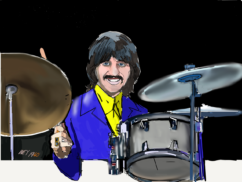
My guests Alex Cain and Terry McCusker are back, presenting a discussion of their newest work, Ringo’s White Album. Building on their previous work, Ringo Starr and The Beatles’ Beat, this work examines in great detail what Ringo brought to these tumultuous 1968 sessions (which he did walk out of at one point), pushing the boundaries of his art with stylistic innovation as well as advanced studio technique. We also talked a bit about Ringo’s work on Abbey Road, which will be the subject of their next deep dive. Alex and Terry are both drummers themselves; tune in to find out which one of them saw The Beatles in Liverpool at The Cavern (with Ringo’s predecessor).
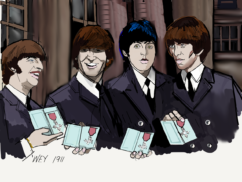
2019’s Danny Boyle rom-cam featuring a Beatles subtext has inspired a lot of discussion among fans this year, given the pretext of a struggling English musician apparently being the only person on Earth who can remember existence of the group. Most of the chatter was about the film itself, but I thought there were even richer discussions to be had, using the film’s core idea as a springboard. The idea for this show was prompted by an article by my guest, Noah Berlatsky (I would encourage listeners to check it out). He forwarded the notion that buying into the film’s premise required universal agreement that 1) The Beatles were the greatest rock band ever and 2) that their music was so great that its inherent genius would be universally recognized no matter who was performing it, and when. We shall see…. There has never been a musically more diverse episode of SATB than this one: in addition to The Fabs, you will be hearing from artists ranging from Chuck Berry and Moon Mullican to R.D. Burman and Rhianna; Dee Dee Sharp and Elvis to Mobley and Nick Drake. Yet it all fits together: what it means to be a successful artist and what are the factors that result in our bestowing the term “genius” upon them.
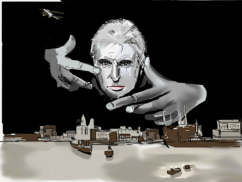
Special guests don’t come much more special: today, a man who needs no introduction. His 1974 album, McGear, was produced with a little help from his big brother (“Our Kid” to you). It features contributions from members of a then-contemporary band, including Linda McCartney, Denny Laine and Jimmy McCulloch, and has often been spoken of as a “missing” Wings album. But Mike’s artistry is all his own, making McGear, in a way, the album Paul never did make. This extended conversation covers not only the brand new re-issue from Cherry Red Records (including a bonus disc of unreleased material + DVD and poster, as well as a deluxe vinyl edition) but Mike’s work with The Scaffold – the 1968 McGough and McGear album produced by Paul – and an array of other artists: Paul Robeson – Tina Turner – Pete Wingfield – Paddy Maloney, and Jimi Hendrix. (Try finding that discussion anywhere else.) Also, The Quarry Men. Check out the reissue series here. Find The Weirdos here. Special thanks to Deb Supnik and Matt Ingham of Cherry Red for making it all happen.
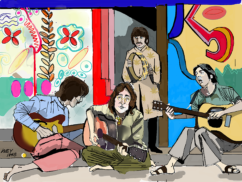
In what will be an occasional theme of SATBs going forward, I welcome to the show Gary Wenstrup. In addition to being a regular listener, Gary is a college-level teacher and lecturer, whose expertise encompasses an array of 1960s music acts. He saw an opportunity for following up shows to dig deeper, in ways that might not have been possible given time constraints. This episode uses as the starting off point my interview with Susan Shumsky, detailing The Beatles’ 1968 visit to Rishikesh; but it also encompasses the White Album, Lennon Remembers, and other ancillary subjects.
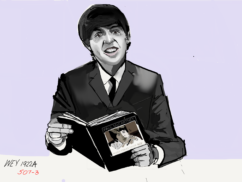
It’s the return of our favorite Fab historian. In this lengthy dialogue, we discuss an array of literature from the Beatles historical canon: among the works
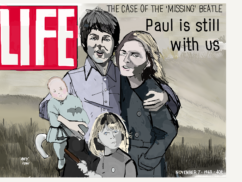
Fifty years on and the “Paul is dead” hoax has lost none of its power to fascinate on so many levels. Perhaps the most compelling angle for examination is how did something so clearly nonsensical in the light of day get disseminated so widely and not just dismissed out of hand? It seems that a perfect storm of circumstance gave it traction and resonance, with both what was happening within The Beatles and within the community most receptive to believing that truth was not what authority figures told us. Helping unpack all of this is sociologist Candy Leonard, author of Beatleness. Her book covers the subject in some detail. Opening song: “Saint Paul” by Terry Knight Closing song: “So Long, Paul” by Werbley Finster, AKA Jose Feliciano
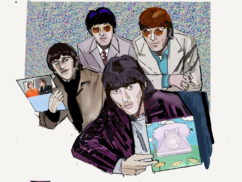
What happens when the surviving member of a legendary American power pop band and a Los Angeles musician whose lineage includes two giants of the Great American Songbook, both steeped in Beatles, get together to make music? The result is now two albums deep in a band called Those Pretty Wrongs. Jody Stephens, formerly of Big Star and Golden Smog is a singer/songwriter/drummer and Luther Russell is a singer/songwriter/multi-instrumentalist/producer, formerly of The Freewheelers. Their latest release as Those Pretty Wrongs, Zed For Zulu, has just been released. Their insights into making music and what they gleaned from The Beatles makes for a fascinating discussion. Check out their work (and current tour dates) here: http://www.thoseprettywrongs.com/ https://lutherrussell.com/ https://www.ardentstudios.com/
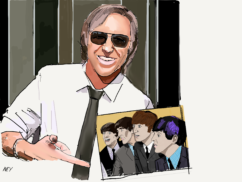
The host of the longest-running Beatles program on US radio, Carter’s passion for The Beatles has taken many forms through the years: