216: Dear Friend
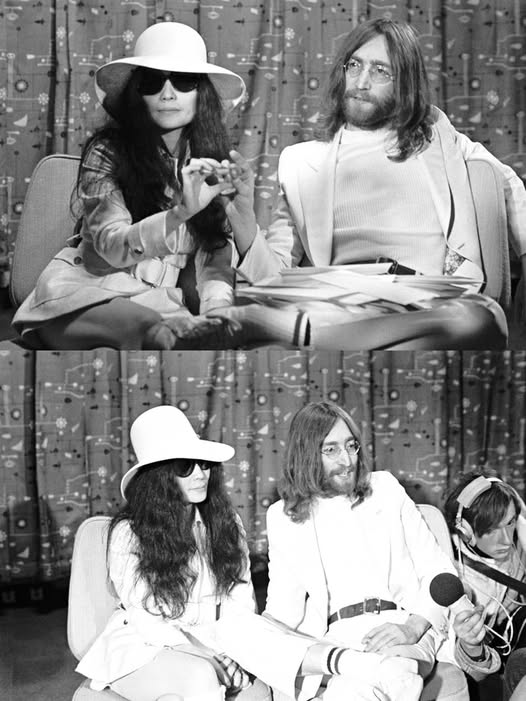
There’s been loads of speculation as to the exact nature of the friendship between John Lennon and Paul McCartney; during and after The Beatles
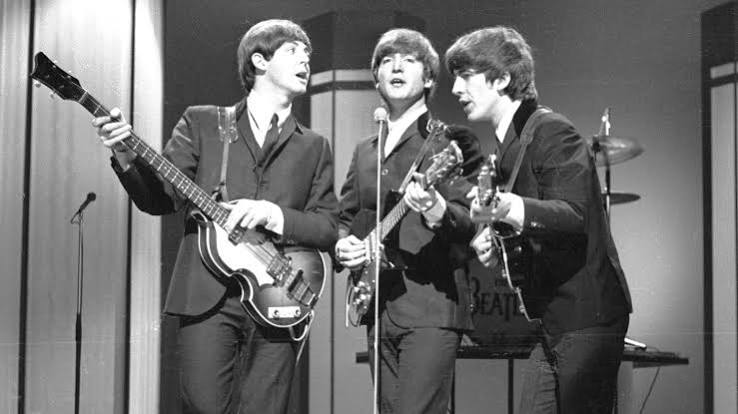
In this discussion, Dr. Duncan Driver (SATB 205, Fab4ConJam, One Sweet Dream podcast) springboard off of the title Paul McCartney quote, in which he asserted that each Beatle was as important as another to the group’s success. We explore the shifting power dynamics within the group and the question of leadership; we also discuss Duncan’s thesis of the four distinctive elements of the Beatles collective identity: live performers – singles makers – album makers – songwriters.
In this episode, we examine the process of a song becoming a record, as heard through the ears of those in the producer’s chair. Luther Russell,
My guest Tim English (Sounds Like Teen Spirit, Popology) discuss his newest book, examining the artists that John was listening to in the last few years of his life and how certain artists and records influenced the recordings he (and Yoko) made during the summer of 1980. Some of the acts we’ve known about for awhile (B-52s, Lene Lovich, etc) but many others were less obvious (The Selecter, Christopher Cross, The Doobie Brothers). John Lennon: 1980 Playlist is out now.
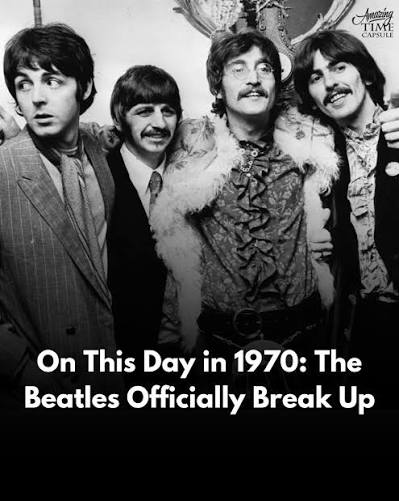
Back in SATB 205, Dr. Duncan Driver (showcased 2+xs at Fab4ConJam) and discussed his article on the timeline to The Beatles break-up. In this episode, returning guest Gary Wenstrup and I dissect the subject further: when exactly did The Beatles – or individual members within – decide they were quits exactly? The answer – like so much else in Fab history – is not as straightforward as you might think.
It was in 1968 that a young Canadian filmmaker, seeking solace in TM for a broken heart, was befriended by The Beatles in Rishikesh during their immersive study with Maharishi Mahesh Yogi. In 2000, Paul Saltzman published his wonderfully immediate photos in a book (The Beatles in Rishikesh), later augmented and re-published as The Beatles in India in 2018. 2020 saw the release of his documentary, Meeting The Beatles in India – a film that brings together others who were there (Pattie and Jenny Boyd) as well as the real “Bungalow Bill,” Beatles historian Mark Lewisohn and filmmaker David Lynch, a major booster of TM. You can check out Paul’s website here, and see the film as well as participate in a Q&A with Paul at the first Fab4ConJam on February 21, 2021. Details: fab4conjam.com
Big things take much time to execute: both this episode and the long-awaited event I’ve been teasing for the last few months….
In which Luther Russell and myself detail our picks for the things in the vault known to exist, group and solo, that we one day hope for Apple to release, in well-presented packages. This episode was the live round-the-world broadcast we did from Chicago back in September 2020, powered by in.live (thanks David Simon!) and that is why you get to hear a bit of the city in the background, along with loads of rare audio detailing what we’re talking about. Happy Holidays to all and onward and upward in 2021!
If you aren’t already aware of this veteran jazz/blues guitarist’s Youtube channel with loads of deconstructions of their music, by all means, check it out. Mike has been performing and recording for decades (18 solo albums), as well as with artists ranging from Phil Keaggy to Micky Dolenz. Like so many others, his life was changed on the evening of February 9th, 1964. Much of the what he absorbed beginning then became the basis for his career, which he now shares in the form of informative videos. In this discussion, he offers his insights into what The Beatles’ primary guitar players were up to and the basis of their brilliance. Check out MikePachelli.com, and his most recent project – High Standards – which features Tony Levin and Danny Gottleib. Mike Pachelli recordings heard in this podcast: 1) “What A Wonderful World” (excerpt) – from High Standards 2) “Swing 42” (excerpt) – from Impressions 3) “Skylark” (excerpt) – from High Standards 4) “These Are Soulful Days” – from High Standards
This episode features a conversation between Luther Russell and I with producer John Leckie – if you aren’t familiar with his name
Returning guest Jack Petruzzelli of The Fab Faux has been playing Beatles music onstage all over the world since 1998. In this conversation, he goes into detail about what goes into the effort to replicate heavily-produced recordings not necessarily intended for live performance, by a core of five members. Given the current conditions, the band is on hold, but Jack can be seen performing online on his Facebook page (“Thursday night service” November 19th 8pm ET), as well as his interactive Beatle class: https://www.gowanusmusicclub.com/beatles-101 Thanks to Joe Chinnici for recording the Fab Faux in New York for the Sirius XM Beatles Channel.
With so many conflicting accounts and blame laid for the series of events that led to The Beatles’ split, it’s hard to detect a coherent narrative that, fifty years on, makes any sense as to exactly what went down and how. But Dr. Duncan Driver, in an article published earlier this year in Beatlefan magazine, has laid out a timeline detailing the sequence of events, from which some measure of patterns emerge. You can (and should) read the full-length piece here. We discuss the direction that things were moving in during the last years of the group (and past that point, too), toward a greater understanding of how events played out, maybe not exactly as we’d been led to believe.
Back in May 2020, my guest Gary Wenstrup and I presented the first half of our conversation, where we offered up our respective lists of what people in Beatle world we would like to be able to sit down and interview: insiders who knew The Beatles well – worked with and for them – and essentially operated as part of the infrastructure; people who haven’t been tapped out as interview subjects. Here are more names we came up with of folks still among the living that may end up on the show yet – time will tell. Gary is a lecturer and adjunct professor at College of DuPage, specializing in Beatles and classic rock. PS: Guess who’s on an upcoming episode of the Fans on the Run podcast? Ethan Alexanian and I just had a lengthy sit down. Also, remember Luther Russell evoking the Yesterday and Today podcast? He and I both contributed to their upcoming 100th episode.
As you may recall: back in July, SATB featured the first part of a conversation covering The Beatles in the studio in 1968, during the White Album sessions and just before.
You may know her as the award-winning veteran rock journalist (Creem, Kerrang!, Mojo, and so forth) who also penned the best-selling biography of Leonard Cohen: I’m Your Man: The Life of Leonard Cohen (2011), as well as Debbie Harry’s memoir, Face It (2019).
In which this returning SATB fave (The Beatles and The Historians) and I expand from previous discussions focusing on books to cover the media specifically around the time of the break-up, and how the nonsensical “John vs Paul – who was the greater genius?” discussion got fueled and put forth into the world. The role of Allen Klein in their break-up is also discussed, in this two-hour conversation that drills deep into the dynamic between these two and how the world viewed it.
For SATB’s 200th episode (more or less), we’re doing something special: returning with guest photographer/writer Ethan Russell, one of this most storied individuals in rock history through his iconic visual documentation of The Beatles
In which my returning guest and I discuss this: what if The Beatles’ songwriting credits were more accurately apportioned to reflect actual significant contributions from not-credited bandmates?
Presented as forerunner of the inevitable show revisiting John Lennon/Plastic Ono Band to come later this year as part of the 50th anniversary, returning guest Chip Madinger (Eight Arms To Hold You, Lennonology) and I discuss some of the assorted odds and sods produced (or proposed) by John Lennon under the Plastic Ono Band brand circa 1969/1970. The POB debut year gave us the singles “Give Peace A Chance” and “Cold Turkey,” but what about the other announced releases? (“Laughing”/”Whispers”; “You Know My Name”/”What’s The New Mary Jane,” and the mysterious instrumental, “Rock Peace”). Chip knows the work and chronology better than anyone when it comes to the solo Beatles and John Lennon in particular. He presents some astonishing information about what was originally planned for 1970 (and about the original form of “How Do You Sleep”). This one’s a treasure trove for Lennononistas… Check out his work at https://www.lennonology.com/ (including the current special).
Previous guest Russ Lease returns with stories from the world of top end collecting: vehicles (including the Magical Mystery Tour bus), attire (shoes, boots, jackets), paper (a Brian Epstein contract) and vinyl.
In his return to the show, we discuss 1968 and the making of the “White Album” (mostly), as explored in his most recent work, The Beatles’ Recording Reference Manual Volume 4. Joining us is another returning guest, recording artist/performer/producer Luther Russell (Those Pretty Wrongs, The Freewheelers, solo). Because we covered so much ground, I am presenting the conversation spread over two parts (the conclusion to follow later….) Check out Jerry’s work here.
It seems particularly fitting at the time we find ourselves in to be discussing the art and career of rock pioneer Little Richard, who passed recently at 87.
So an idea came up: who would SATB like to talk to in Beatle world and sit down for an interview? Qualifications: first, they have to be among the living (as of this taping); Second, they have to be completely honest and not fall back on deflection or “professional Beatle fan” chatter: stories they’ve entertained with for years that may or may not be factually accurate. Last, they have to be people on the inside who have either not told their stories at all or not told them to death. Though mortality hangs over us all, there are still folks out there who, to the best of my knowledge, range to speaking on record only sparingly or not at all; have written books, but if we discussed them here, it’s because their books didn’t go deep enough or raised more questions.) Joining in the conversation is a returning guest (182 and 188), retired academic Gary Wenstrup. He came up with his list, I came up with mine, and together we covered as much ground as we could in this, the first of a two-parter (at least).
Rock historian and radio interviewer Spencer Leigh has been chronicling the music scene generally and The Beatles specifically from his native Merseyside for decades. He has penned well over two dozen books, half of them on Beatles-specific subjects. In this conversation, we discuss an array of topics, including writing and researching The Beatles; Bob Wooler; Liverpool bands; Bob Dylan, and Ken Dodd, among other topics. Check out Spencer’s work here.