
Newsletter #22 April 7, 2025
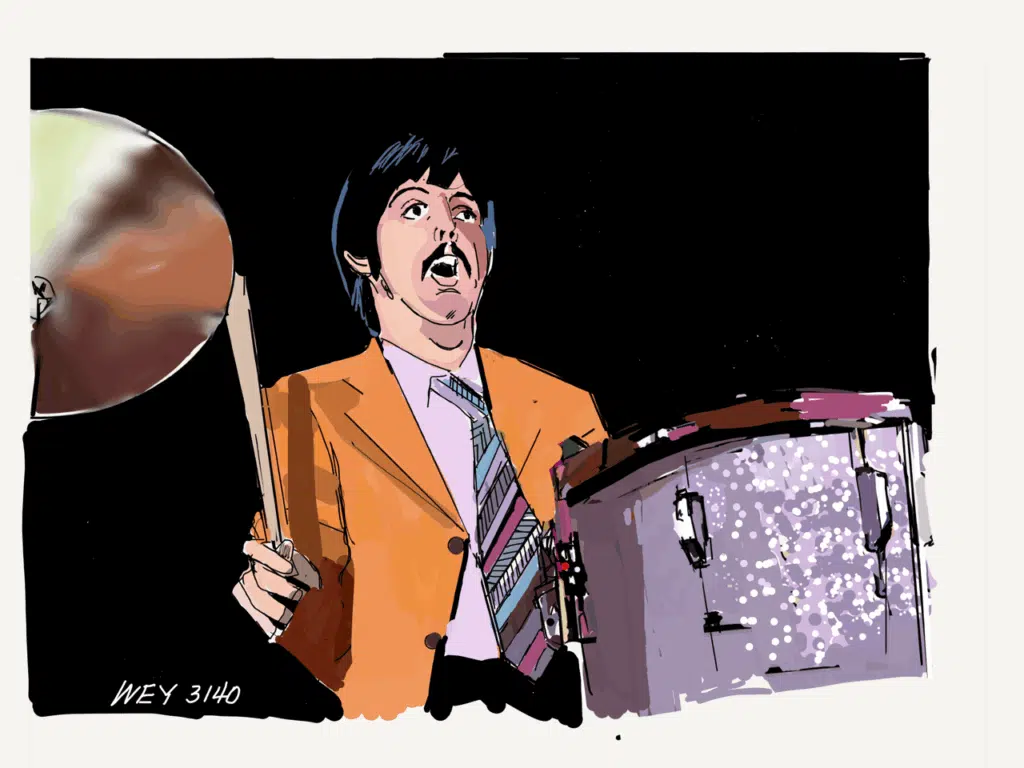
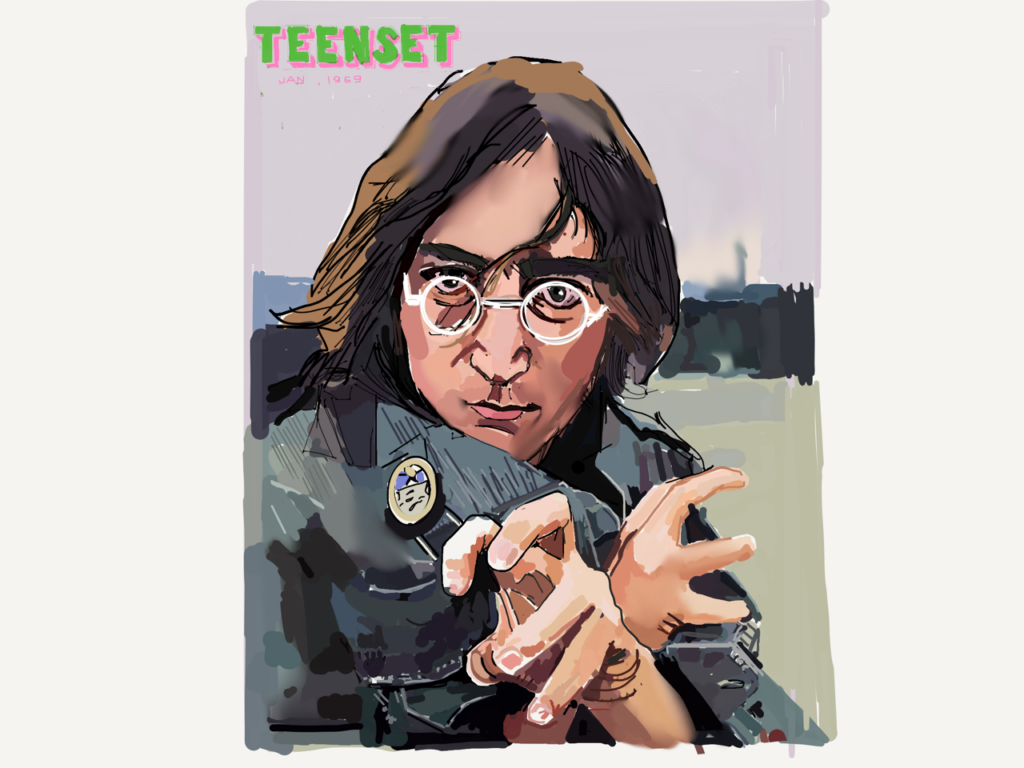
Hello folks; Welcome to another week. I was hoping to make it two in a row without something sad to report but might as well get this out of the way now: the passing of drummer Clem Burke, best known for his work with Blondie (but he’s played with an astonishing array of artists nearly beyond measure). He was 70 and suffering from cancer. Clem was, in the parlance, a musician’s musician: he could drum with the maniacal energy of a Keith Moon but with control in place of complete abandon. His hyper-kinetic style was very much a defining element of his band’s sound. By all accounts, he was a sweet and humble guy, and best of all, he was one of us: belonging to that 1st-generation of US fans whose lives were transformed as one of the 73 million that tuned in that February night. He spoke often of his fandom and as he relates here, met three of his heroes (while the 4th, John, documented his fandom of Blondie). Also – he was a left-hander who played with a right-handed set-up. (Remind you of anyone?) His playing always made me smile and I know it must have for millions of other fans. Shine on! The big Beatles story of the week though was the announced casting of the four leads in director Sam Mendes’ four Beatles films, ETA 2028. Everyone of course had to weigh in, including tons of people who know nothing about acting or filmmaking. The reaction across social media was as though they’d announced the finalists in a look-alike contest. (You know: the kind of thing they did regularly back in the 1960s.) There was a time in my immaturity that I might have been inclined to agree with the curious choices made based on physical appearance alone, but – I think we’re past the point where looks are the primary driver in such situations. It’s a rare thing when someone looks the part and has acting chops (does anyone else think that Cillian Murphy in his youth would’ve made a splendid Klaus Voormann?), but usually the success of projects based on real life well-known personas is based more on the script and direction rather than the capacity to resemble their character. (Daniel Day-Lewis was a rare exception in a long line of Lincoln biopics where he really did nail performance and looks.) And David Bowie’s lack of resemblance to Joseph Merrick wasn’t a deal breaker either. I guess my point is that, before everyone loses their minds over this and starts hating on it frame-unseen, we should trust that Mendes knows what he’s doing. Here’s one reasoned response. In other news: a painting by the late Scottish artist John Patrick Byrne went up for auction. It has often been reported as commissioned by The Beatles at some point between A Doll’s House and the arrival of Richard Hamilton as the cover art for what we call the “White Album.” This is not true: what is is that it was commissioned by artist Alan Aldridge for use as a frontispiece to his Beatles Illustrated Lyrics book (1969), which indeed it was. (Apparently there was a small and a large version: this auction was of the smaller version, while the larger piece was used in 1980 for the cover of The Beatles Ballads compilation.) 302 arrived this weekend: a conversation with Allison Bumsted about her book, covering TeenSet magazine and teen lit generally, and where the Beatles specifically interacted with the publishers. Also discussed: the story of DateBook and the “more popular than Jesus” controversy. She’s got an article that will be published online for free at any moment now that can be accessed here. The Q&A portion of her book launch is posted here. Next up is my conversation with Ian Leslie, he of the recently published John and Paul: A Love Story in Songs. Like so much else, it too has stirred some strong reactions from people, possibly louder from those who haven’t actually read it yet. I would again suggest patience and give this talk a listen: I think it’s an important book that connects some dots and at the very least, can influence the way you will hear their music going forward. Don’t take my word though… David Sheff’s recently published Yoko biography has been mentioned here previously. I haven’t yet read it but fully intend to; nonetheless, the Guardian once again says in print what I am inclined to believe, based on the personas involved. Yoko (and John, and in fact, all of the Beatles…) are all worthy of balanced, fair-minded explorations in print, based on data and not specific agendas/reactions to other things going on. I am hoping that we get there someday, but it may take many more years, beyond the lifetimes of the subjects, for this to happen. In the meantime, this is a big deal. You can bet I will be checking it out. (On the subject of balance: I posted one review last time and here’s another.) On the subject of writers and the past: this week was the book launch for my latest (with Jerry Hammack), Ribbons of Rust. Video of the call, which included the esteemed John Leckie, Sibbie O’Sullivan and Richard Mills, plus a supporting cast of innocent bystanders, will be posted in due course. Rather, it was the announcement of the event that drew unasked for attention, from a name that will likely be familiar to all subscribers to this newsletter. Said correspondent had this to say: “Please…. I think you guys are about 30 years late to the Beatles book business” before adding: what I see is people who have an obsession for a rock band that broke up over 50 years ago. I got in in 1984. I wrote the books that I wrote. I had my relationship with the people involved from both the inner and outer circle and moved on. I find it remarkable that people are willing